Sticky Buttercup: A Friendly Handwritten Font
There I was, staring at a blank brand board, trying to find the right visual voice for a new artisanal café. The client wanted something warm, approachable, and a little whimsical. After testing several options, I landed on Sticky Buttercup. It felt like the perfect fit—simple, adaptable, and friendly.
What Is Sticky Buttercup?
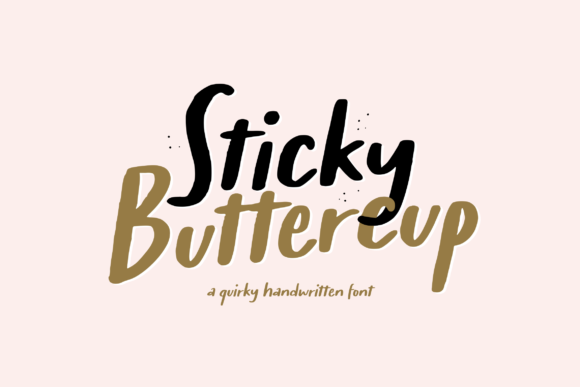
Sticky Buttercup is a handwritten font that exudes a casual, personal vibe. Its fluid strokes and soft curves give it a sense of warmth and accessibility. The font has a natural, almost organic feel that makes it ideal for brands looking to convey authenticity and creativity. With PUA encoding, it’s easy to access all the glyphs and ligatures without any extra steps.
It’s not just about looks, though. The font feels versatile enough to work in multiple design contexts. From logos to packaging, it maintains a consistent personality while adapting to different scales and formats.
Testing Sticky Buttercup in Real Projects
I first tested Sticky Buttercup on a logo concept for the café. The font’s rounded shapes and gentle lines gave the logo a friendly, inviting feel. It worked well as a headline, adding a human touch that felt more personal than a standard sans serif or serif font.
Next, I placed it on a packaging mockup. The font looked great on both large and small surfaces. On a coffee bag, it added a handcrafted quality that aligned with the brand’s values. On a product label, it maintained clarity without being too busy.
On a business card, Sticky Buttercup stood out without overwhelming the design. It paired well with a clean sans serif for the contact details, creating a nice contrast that kept the focus on the main text.
For social media graphics, the font brought a sense of energy and movement. It worked especially well in Instagram posts and Facebook banners, where a bit of personality can make a big difference.
Strengths and Limitations
One of the biggest strengths of Sticky Buttercup is its adaptability. It works well as a display font, especially for headlines, logos, and short phrases. Its friendly appearance makes it ideal for creative studios, handmade shops, and boutique brands looking to stand out.
However, it’s not the best choice for long body text. In smaller sizes, the font can become less readable, especially in print. It also isn’t the most formal option, so it might not be suitable for corporate or high-end branding projects that require a more polished look.
That said, when used appropriately, Sticky Buttercup adds a unique character that can elevate a design. It’s a great accent font, especially when paired with more structured typefaces.
Font Pairing and Design Applications
Pairing Sticky Buttercup with a serif or sans serif font can create a balanced and professional look. For example, using it alongside a classic serif like Georgia or a modern sans like Helvetica Neue can add visual interest while maintaining readability.
In editorial design, the font can be used for headings or subheadings to draw attention without disrupting the flow of the content. In web design, it works well for hero sections or call-to-action buttons, where a bit of personality can enhance user engagement.
When working on a packaging design, Sticky Buttercup can help create a cohesive brand identity. Its friendly style aligns well with products that emphasize craftsmanship, sustainability, or local sourcing.
Practical Tips for Using Sticky Buttercup
If you’re considering using Sticky Buttercup in your next project, it’s important to test it thoroughly. Try it on different backgrounds, in various sizes, and in different contexts to see how it performs. Pay attention to how it reads in both digital and print formats.
Also, check the font’s licensing before using it in client work or commercial projects. Make sure you have the proper rights for the intended use, whether it’s for a website, printed materials, or merchandise.
Lastly, remember that Sticky Buttercup is best used as a display or accent font. It shines when it’s given space to breathe and isn’t overused in a design. Use it strategically to add personality and visual interest without compromising clarity or professionalism.
Overall, Sticky Buttercup is a valuable addition to any designer’s toolkit. Its simplicity, adaptability, and friendly nature make it a great choice for a wide range of creative projects. Whether you're working on a café identity, a skincare brand, or a handmade shop, this font can help bring your vision to life with a touch of warmth and charm.